The Kid Behind the Initials: Why Fake High Scores Made Us Better
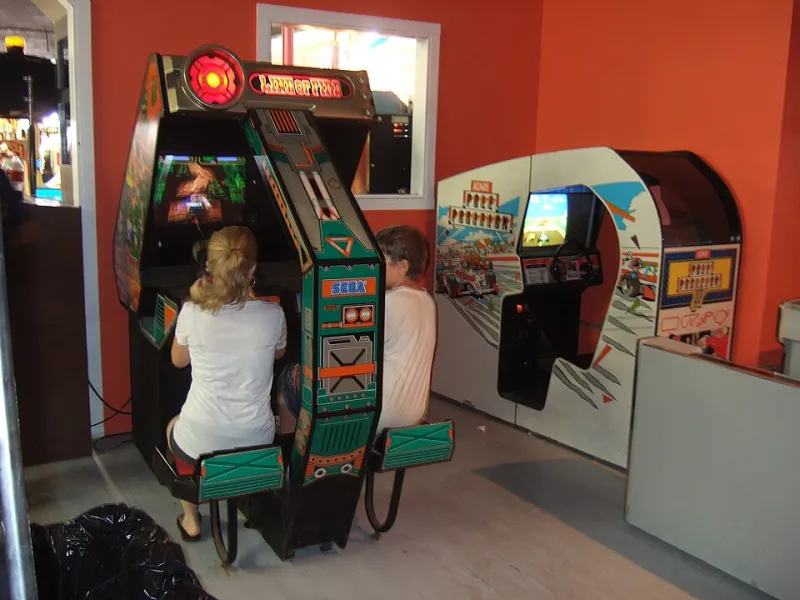
Photo: Rob DiCaterino from Jersey City, NJ, USA, CC BY 2.0, via Wikimedia Commons
The arcade was wedged between a nail salon and a discount mattress store, and the high score table on the Galaga cabinet was the most important social document in my town. Not the newspaper. Not the church bulletin. The table. Three letters and a number, glowing in amber, ranked in public, updated without warning. It was a group chat with a scoreboard.
I was nine. I did not have a profile, an avatar, or a handle. I had initials, and I had a lie I was willing to defend at recess.
A Social Network With Three Letters
The high score table was America's first social network, and it was better than most of the ones we have now because it was small. Local. Petty. You knew the guy who held the top spot on the Street Fighter II machine. You knew he wore a denim jacket and had a older brother who worked at the mall. You knew exactly how many quarters it would take to dethrone him, because you had counted.
There were no followers. There was no feed. There was just a list, ranked, in front of God and the guy behind the counter who did not care. Your three letters were your whole online presence, and they were permanent until somebody better came along. That is a kind of honesty you cannot algorithm your way into.
The Lie That Made Us Practice
Here is the part nobody talks about: half the names on those tables were fake. Not stolen. Invented. Kids put up AAA because they wanted to see what it looked like. They put up ASS because they were twelve. They put up POO, ZAP, ACE, and the initials of a girl in their math class who had never touched a joystick in her life. The table was a folklore project with a coin slot.
And here is the thing: the lie made us better. If you put up AAA, you had to become the kind of person who could defend AAA. You went back the next day. You practiced the pattern. You learned the timing on the third wave. The score was real even if the name was a draft. The lie was a promise you made to a machine, and the machine did not care whether you kept it. You cared.
Local Legends and the Sacred Order of the Quarter
Every arcade had its local legend. The kid who claimed he knew a guy who got 999,990 on a machine in another town. The teenager who could finish the game on one credit and would not show you how. The bowling alley cabinet with a score so old the initials had faded into a kind of ghost monogram. These were not just scores. They were stories. The table was a bulletin board for a town that did not have a town square.
The ritual mattered. You saved quarters. You watched the attract mode. You waited for the cabinet to be free. You put your initials in and stepped back like you had just signed a treaty. Then you watched the next kid try to knock you off. That is a public square. That is a conversation. That is a bunch of strangers agreeing, for a few minutes, that the number matters.
Why Indie Leaderboards Feel Like Town Squares Again
In 2026, a handful of small indies are quietly bringing the public leaderboard back. Not the global esports kind. The other kind. Daily challenges with a shared table. Ghost initials. A scoreboard that shows the top twenty and nothing else. No seasons. No battle pass. Just a list and a number and a name you made up.
It works because it is small. A global leaderboard is a billboard. A local leaderboard is a porch. You can see the top of it. You can see the names. You can imagine the person. You can imagine being the person. That is the whole trick, and it has not changed since 1983. The table does not need to be big. It needs to be yours.
The Score Is Real Even If the Name Isn't
The fake initials were never the crime. They were the invitation. They said: I was here, I tried, I made a little noise in a public place. The high score table was a love letter to the lie that made us better. In 2026, we could use a few more tables like that. Small ones. Public ones. Ones where the top spot is held by somebody called AAA and everybody knows it is a kid from down the street.


