After the Kids Are Down: America's Naptime Developers Are Quietly Shipping Bangers
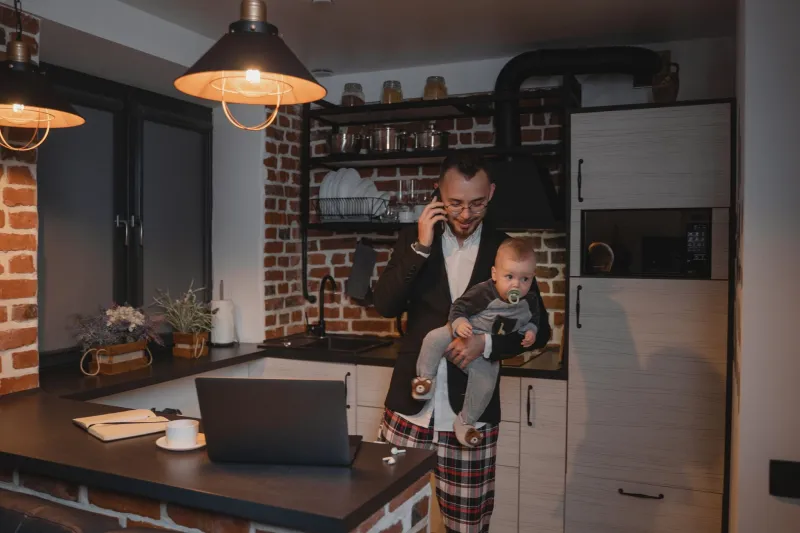
It's 8:47 p.m. in a split-level house outside Dayton, Ohio. The dishes are soaking. A Paw Patrol episode is finally, mercifully over. And in the glow of a secondhand monitor wedged between a bread machine and a stack of permission slips, a game is being born.
This is the office of Sarah Kimmel, 41, solo developer of Possum Springs Lottery, a cozy farming roguelike with 40,000 downloads and a Discord server that runs without her. She has two kids, a day job in medical billing, and a development window of roughly 110 minutes a night. She would not trade it for anything.
"People assume you can't ship a game in two-hour chunks," she tells me over a Zoom call punctuated by a smoke detector chirping for a battery she has not yet changed. "You can. It just takes four years instead of one. I've made peace with that."
The Layoff That Launched a Thousand Kitchens
Kimmel is one face of a wave that doesn't have a formal name, so the community built one: naptime devs. The recipe is simple and increasingly common. Take one parent, recently downsized or permanently burned out from corporate tech. Add an engine that costs nothing — Godot, mostly, with a healthy side of GameMaker — plus a decade of half-finished design docs living in a Notes app. Bake nightly, after bedtime, until done.
The 2022–2024 layoff wave emptied a lot of cubicles, and a strange side effect is now visible on itch.io and Steam: middle American parents who spent years building other people's software decided that if the corporate ladder was going to kick them off, they might as well climb something they actually wanted to be on.
The result is a catalog of games that could only come from this exact life. Possum Springs Lottery is fundamentally about making a modest plot of land thrive on limited resources, which — Kimmel admits — "is just parenting with better weather."
Two Hours, Forty Minutes of Which Is Remembering Where You Left Off
Ask any naptime dev about their workflow and you'll hear the same sacred ritual: the session note. Because context is the scarcest resource in this economy, these developers have become obsessive documenters. Kimmel keeps a "next-up.txt" that she updates every night before closing the laptop, sometimes mid-sentence.
"I wrote 'fix the cow, she knows' once," she says. "I still don't fully know what I meant, but past me was right. The cow knew."
Marcus Bell, 38, a former enterprise Java developer in Tulsa, Oklahoma, works the same way — but his constraints are tighter. His daughter has type 1 diabetes, and his dev sessions happen in hospital waiting rooms and 3 a.m. blood sugar checks. His game, Insulin Quest (working title, mercifully), is a pixel-art dungeon crawler where healing potions require actual resource management.
"It started as therapy," Bell says. "It's still therapy. But now it's therapy with a Steam page."
His build pipeline is a marvel of desperation: version control on a thumb drive, because the family Wi-Fi dies whenever the microwave runs. He has shipped every update so far from a Panera. The Panera knows him. The Panera has opinions about his level design.
What Middle America Wants to Play
Spend enough time in naptime dev Discords and a pattern emerges in what these games look like. There's a lot of farming. A lot of small-town mystery. A lot of games where the core loop is, essentially, take care of things and they get better.
It's tempting to get precious about this — to call it some grand statement about heartland values. The developers themselves are more pragmatic.
"I make what I know," says Dee Alvarez, 45, whose game Waffle House of the Dead — yes, really — lets you defend a 24-hour diner during a zombie outbreak using nothing but grit, hashbrowns, and a waffle iron. "I worked nights at a diner in college. When everything else in a horror game is abandoned and dark, I always wondered: what about the people who are supposed to be there at 3 a.m.?"
Alvarez's game blew up on TikTok last fall, largely because of a mechanic where the jukebox choice affects which zombies show up. She coded that feature at her kitchen table in Mesa, Arizona, while her son practiced trumpet one room over. The trumpet is faintly audible in her dev stream archives. Fans consider it a feature.
The Economics of Almost Nothing
Here's the part the game industry press won't tell you: these games are profitable at numbers that would make a publisher weep. No office. No salaries. No crunch, because you cannot crunch a person who has to be up at 6:15 a.m. for school pickup.
Kimmel's game has grossed "a nice family vacation per year, plus the good groceries." Bell reinvests everything into assets and a occasional contractor for music. Alvarez quit her property management job last spring — the first naptime dev I spoke with who did — and immediately felt guilty about it, then got over it.
The barrier to entry has never been lower, and that's the point. The tools are free. The distribution is free. The only real cost is the two hours a night, the discipline to protect them, and the willingness to build a cow that knows.
Somewhere in America tonight, hundreds of kitchen tables are doubling as studios. The dishes are soaking. The games are shipping. And nobody, anywhere, is holding a standup meeting about it — which might be the most punk rock thing happening in games right now.