Four Channels and a Dream: Meet the Composers Who Never Left 1989
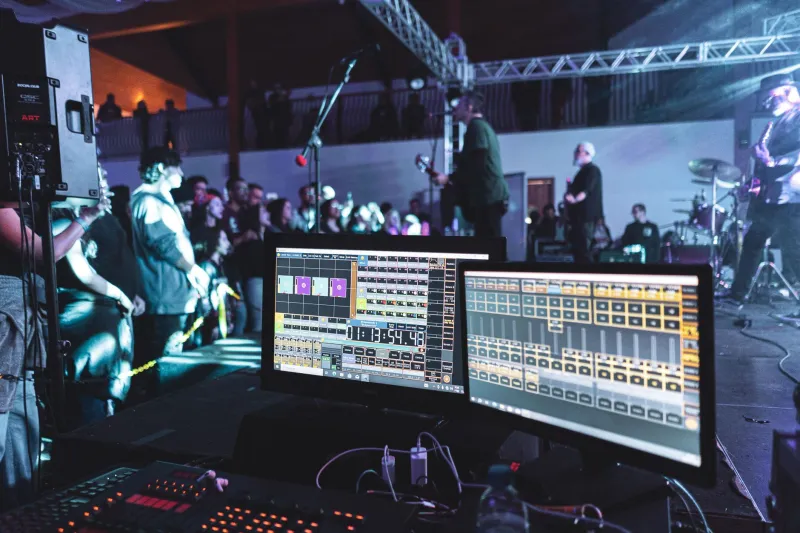
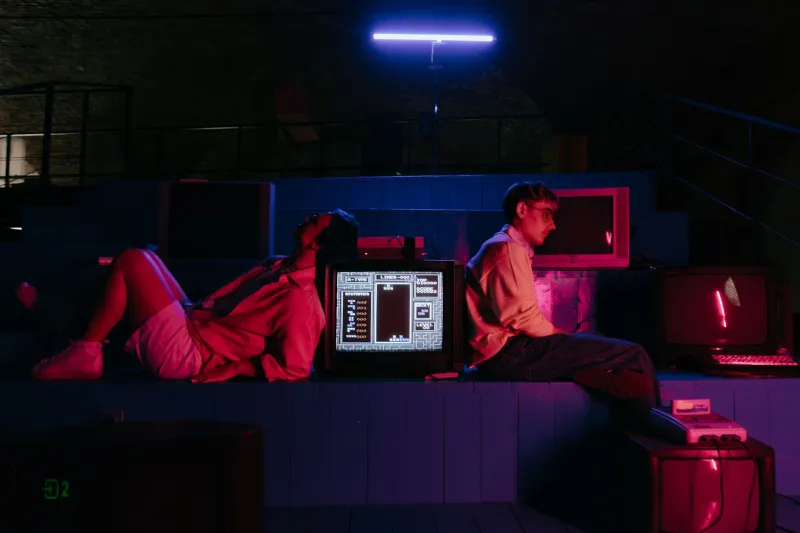
There's a moment at every chiptune show that never stops being funny. A musician steps on stage, pulls out what appears to be a toy from a yard sale, blows into the cartridge slot like it's a fine cigar, and then proceeds to absolutely level the room with a bassline that shouldn't be physically possible on hardware older than most of the audience.
Welcome to the American chiptune scene, where the gear is obsolete and the music absolutely is not.
The Beauty of Only Having Four Friends
Here's the thing about an original Game Boy: it has four channels. Two pulse waves, one wave channel, and a noise channel for percussion. That's it. That's the orchestra.
For the composers who work this way — folks in the orbit of scenes in Brooklyn, Portland, Austin, and a surprising number of Midwest basements — those four channels aren't a limitation. They're a forcing function. When you can't layer forty string tracks to hide a weak melody, your melody has to actually be good. Every note earns its seat or gets cut.
Compare that to modern game scoring, where a composer can drown a mediocre hook in reverb and sample libraries until it sounds expensive. Chip music can't hide. It's the musical equivalent of pixel art: nothing to lean on but the ideas themselves.
And the sound? It's not nostalgia, exactly. It's texture. A pulse wave has a bite that no plugin has ever convincingly faked. Your ear knows. Your brain knows. There's a reason a certain generation of players gets a physical jolt from a properly crunched NES drum hit.
Why Indie Devs Keep Coming Back
Scroll through the credits of the last five indie hits you loved and there's a decent chance at least one of them was scored on real hardware or faithful emulation of it. The reasons are practical as much as artistic:
- It loops forever without getting old. Four channels means no muddy low end, which means a track can cycle for twenty minutes in a dungeon without fatiguing the player.
- The files are tiny. An entire chiptune soundtrack can be smaller than one second of a streamed orchestral WAV.
- It matches the art. If your game is pixel art, an orchestral score can feel like a tuxedo on a cartoon character. Chip music and pixel art speak the same language.
- It's affordable. Which, let's be honest, matters.
That last one deserves unpacking, because there's a persistent myth that commissioning original music is a luxury. In the chip scene, it's often the opposite of a luxury — it's a hustle economy.
How to Actually Hire a Chip Composer
The scene lives in a few predictable places. Bandcamp is the storefront, naturally. Discord servers dedicated to chip music and LSDJ (the venerable Game Boy tracker program) are the town square. And the live circuit — small club shows, byte-forward music festivals, retro nights at dive bars — is where you'll meet people whose entire personality is a modified DMG with a pro-sound output jack.
A few tips from devs who've done it:
- Lead with the game, not the budget. Chip composers are gamers first. Show them a build or a GIF. A composer who's excited about your project will negotiate; one who isn't will quote you and move on.
- Ask about hardware vs. emulation. Some artists compose on original hardware and record from it. Others use VSTs that mimic the chips. Both are legitimate, but the price and the sound differ. Know what you're buying.
- Budget realistically. A single loop track from a mid-career chip artist might run a few hundred dollars; a full soundtrack scales up from there. That's still usually cheaper than hiring session strings for one afternoon.
- Get the file formats sorted upfront. Native tracker files, WAV stems, loop points. Sorting this out in the contract saves everyone a headache at submission time.
The Upgrade Nobody Wants
You might wonder: why not just upgrade? Modern trackers can emulate chip sound flawlessly, with infinite polyphony and no risk of a Game Boy dying mid-session.
But ask around the scene and you'll hear the same answer in different dialects. The hardware pushes back. It fights you. Writing on a tracker with hard channel limits is like writing a sonnet — the constraint is the point. Composers describe the old machines as collaborators, cranky ones, machines with opinions about what you're allowed to do.
There's also the community factor. The chip scene is one of the last corners of music where the barrier to entry is a thirty-dollar handheld and free software. Kids show up with beat-up Game Boys and, six months later, are sharing bills with scene veterans. Try that at a conservatory.
So the next time your indie game needs a soundtrack and you're staring down a sample library subscription, consider the four-channel life. Somewhere out there is a composer with a battered handheld, a soldering iron, and a melody your players will be humming for twenty years.
Just maybe don't ask to blow into their cartridge.