Please Wait: The Loading Bar Is the Last Honest Room in Games

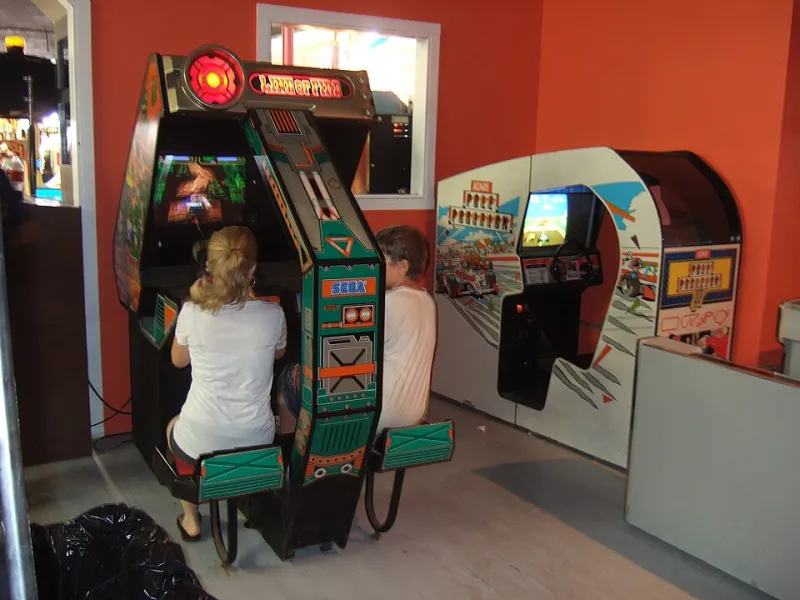
Photo: Basile Morin, CC BY-SA 4.0, via Wikimedia Commons
Every other screen in a modern game wants something from you. The main menu wants your login. The storefront wants your wallet. The map wants your attention. The loading screen wants nothing. It just says please wait, and then it waits. It is the last honest room in the building.
That is not a small thing. That is a design opportunity wearing a progress bar.
The Only Screen Nobody Sold
Loading screens are interstitial. They are the hallway between the thing you bought and the thing you are doing. For a long time, that made them invisible. Now it makes them precious. You cannot put a battle pass on a loading screen without looking like a monster. You cannot upsell a skin while the hard drive is spinning. The format resists the pitch. It is the one place in the game where the developer is allowed to be a person instead of a product manager.
And what do we do with that freedom? Mostly we put a tip about the dodge button and a spinning icon. We treat the zine cover like a parking lot.
Accidental Galleries
Some of the best loading screens are accidental art galleries. Concept art that never made it into the game. A sketch of a character who got cut. A wide shot of a level you will never visit. The loading screen is a place to show the seams, and the seams are often more interesting than the quilt.
A loading screen can also be a manifesto. A paragraph about why the game exists. A thank-you to the person who fixed the shader at 2 a.m. A fake advertisement for a store in the game world. A poem. A bad joke. The screen is already a pause. You might as well make the pause mean something.
Fake Tips and Real Voices
The loading screen tip is its own tiny genre. Some tips are useful. Some are jokes. Some are lies — press Alt+F4 to save, said every game ever, to every kid who believed it. The lie is part of the charm. It is a human voice, badly translated, trying to be helpful. It is the same energy as a handwritten sign taped to a cash register.
Indie devs understand this better than anyone. They have smaller teams and fewer layers, which means the loading screen can actually sound like them. A scrappy studio can put a weird note in there. A confession. A plug for a friend's game. A line of dialogue from a character who does not appear until hour six. The loading screen is a bathroom wall, and bathroom walls are where the truth lives.
Hidden Minigames and the Joy of Wasted Time
Ridge Racer had Galaga in its loading screen in 1993. That is the gold standard, and it is still shocking. Somebody looked at the wait and decided to give the player a whole second game instead of a progress bar. It was generous. It was weird. It was the opposite of a waiting room.
You do not need to ship a hidden arcade game. You need to ship the spirit of one. A loading screen that respects you enough to be boring is already a gift. One that plays with you is a friendship. A tiny input toy. A fake terminal. A cursor you can move. Anything that says: we know you are waiting, and we are waiting with you.
Make It a Zine Cover
Here is the argument. The loading screen is the zine cover of the game. It is cheap to make, it is personal, and it is the first thing a lot of players will see after the title. Treat it like a photocopied manifesto, not a tax form.
Put a drawing on it. Put a credit on it. Put a weird little message from the person who tuned the jump. Put a fake ad for a fictional pizza place. Put a single line of dialogue that will not make sense until the end. The loading screen is the only place in the game where you are allowed to be unpolished. Use it.
The Progress Bar Is a Stage
The loading screen is honest because it admits the game is a machine. It does not pretend the disc is magic. It says: please wait, I am thinking. That is more honest than most menus. In 2026, with every other pixel optimized within an inch of its life, the loading screen is the last place where a scrappy dev can be a little weird and a little personal and a little bit themselves.
Do not waste it on a spinning icon. Make it a zine cover. The player is already waiting. Give them something worth waiting for.