RTFM, Kiddo: The Parents Raising a Generation on 1987 Instruction Booklets

Photo by Photo by Volodymyr Fedorychak on Unsplash on Unsplash
There's a photo that keeps making the rounds in a Facebook group called Manuals Matter (4,200 members and counting): a kid, maybe seven years old, cross-legged on a shag rug, reading the instruction booklet for Metal Gear on the NES like it's a paperback thriller. The caption reads, simply: "She wouldn't put it down. We hadn't even plugged in the console yet."
If you grew up in the '80s or early '90s, this scene requires no explanation. The game came in a cardboard box, and inside that box — beneath the cartridge, usually — was a booklet. Somewhere between eight and forty-eight pages of hand-drawn art, backstory nobody needed, and a "Pro Tips" page that may or may not have been legally binding. And for a certain kind of parent in 2024, that booklet has become the unexpected star of family game night.
The Manual Was the Loading Screen
Here's the thing modern gaming forgot: the manual used to do the heavy lifting. The cartridge couldn't hold a cutscene, so Nintendo of America's writers had to smuggle entire universes into six-page booklets. The Zelda manual gave you a full bestiary. The Metroid manual explained, in prose, that Samus was a woman — a twist the game itself saved for the end. Ultima: Exodus shipped with a booklet so dense it came with its own second booklet.
"You didn't watch the story. You read it, and then you went and found it," says Dana Whitfield, a 47-year-old dad in Columbus, Ohio, who has been running what he calls "manual bedtime" with his nine-year-old since second grade. "We read the Dragon Warrior manual cover to cover before we ever touched the D-pad. She thought the Erdrick storyline was the book and the game was the adaptation. Honestly? Not wrong."
Whitfield isn't alone, and he's not purely nostalgic, either. There's a practical argument buried in the nostalgia: manuals were some of the only long-form text kids encountered voluntarily. Maps to decode. Enemy stats to memorize. A paragraph of lore that only mattered if you cared. It was reading comprehension with a boss fight at the end.
"My kid's teacher sent home a note about how well he retells stories," says Marisol Vega, a parent in San Antonio who runs the Instagram account @bedtimebooklets. "Sir, he learned narrative structure from the Maniac Mansion manual. We're calling it a win and moving on."
The Collector Economy Nobody Planned For
Of course, you can't hand down what you don't have, and thirty years of garage sales have not been kind to paper goods. Loose cartridges are a dime a dozen at Midwest flea markets. Boxed copies with intact manuals — what collectors call "CIB," complete in box — command serious premiums. A CIB Chrono Trigger with the map and the poster can run north of $400. Even the humble Super Mario Bros. booklet, once stuffing material for shoeboxes, has become a traded commodity.
That scarcity has spawned a cottage industry of preservationists: scan-and-share archives, high-resolution PDF repos, and a thriving community of people who rebind water-damaged booklets with archival tape and post before-and-afters like they're restoring a fresco. The tone is less "collector flex," more "county hospital volunteer."
Small Presses, Big Staple Counts
And now the format is being resurrected — not by the giants, but by indie studios and zine-adjacent small presses who understand the assignment.
Portland-based Bindlewright Press started two years ago printing deluxe manuals for modern indie games — chunky, full-color booklets for titles that ship digitally and would otherwise come with nothing but a Steam key. Their run for the pixel-art dungeon crawler Hollow Chapel sold out in eleven days. "The developer told us players were finishing the game and then reading the manual like a bonus epilogue," says founder Theo Nakamura. "That's the dream. The manual used to be the first thing you touched. It can be the last thing, too."
Other studios are treating the booklet as a reward rather than a requirement — physical tier exclusives on Kickstarter, lore codices styled after 1989 Squaresoft, even a "worn copy" variant with fake coffee rings for authenticity. Scrappy? Absolutely. Sincere? Completely.
Pro Tips for the Next Generation
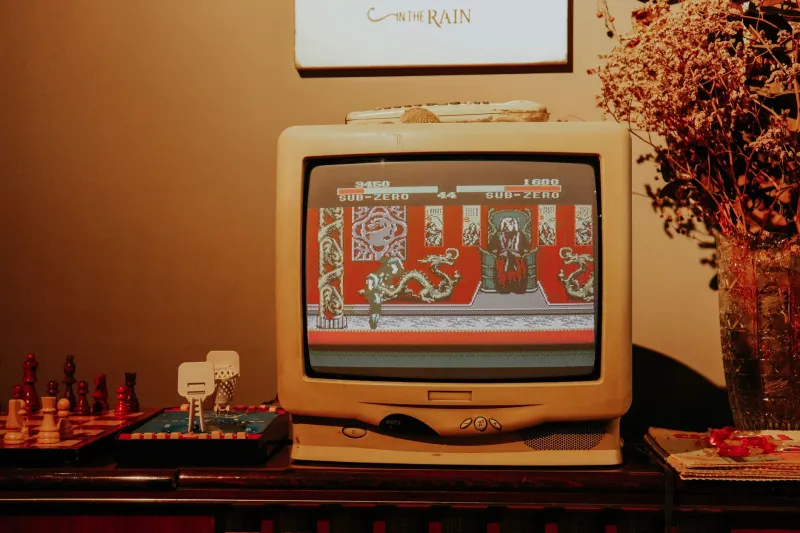
So if you're a parent staring down a summer break with a kid and a CRT, consider the low-tech route. Dig through the closet. Check the box before you sell the cart. And if all you've got is a scanned PDF, print it, staple it, and let the kid dog-ear it. That's what it's for.
Because the manual was never just instructions. It was a promise — that this plastic thing in your hands contained a world big enough to need a map. Some of us are just now getting around to reading it to our kids.
Pro tip: they're going to ask you to do all the voices. Budget accordingly.